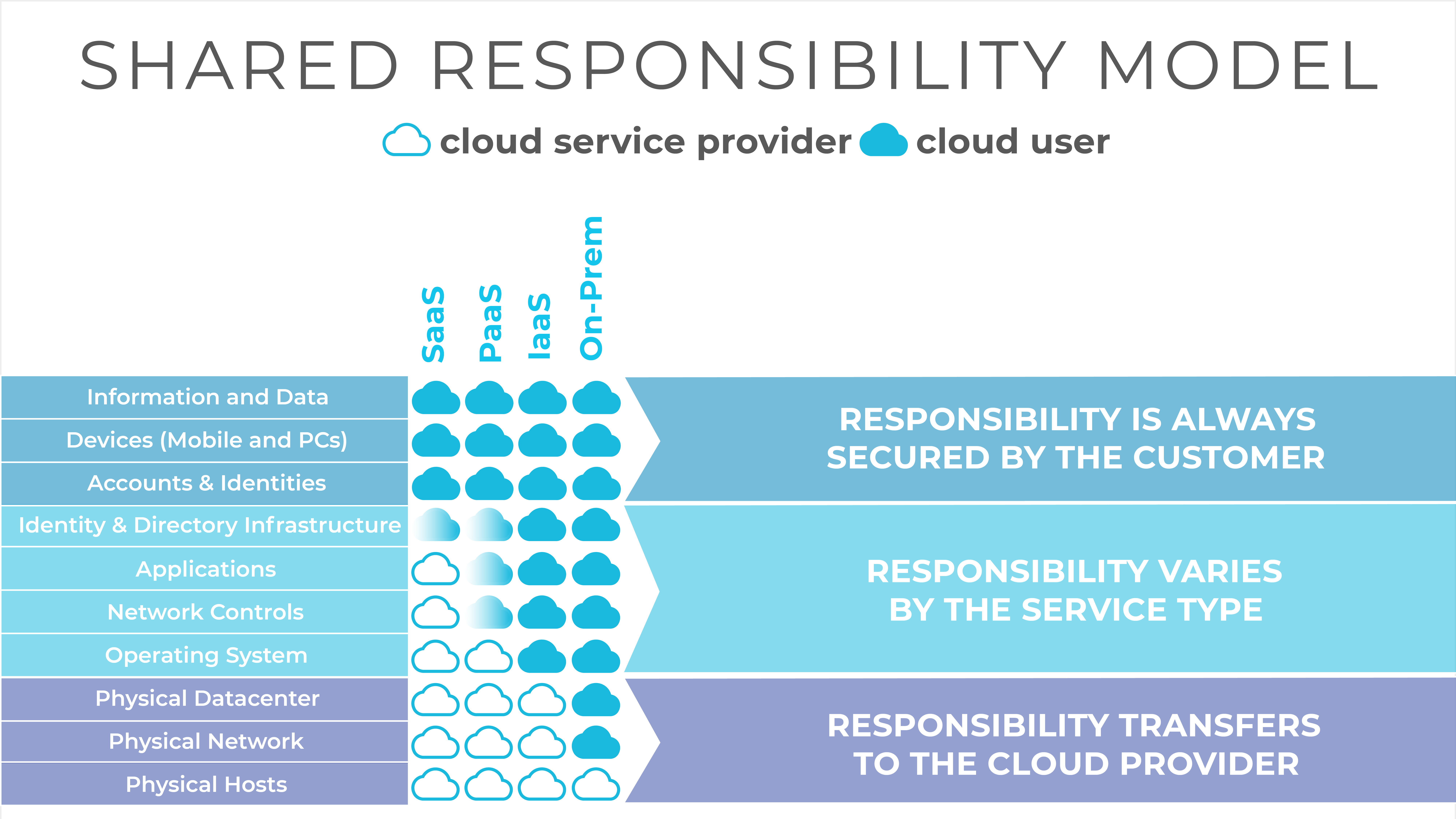
The shared responsibility model describes how cloud security duties are divided between the cloud provider and the customer. It prevents confusion about who protects what. Cloud providers manage the physical and core infrastructure while customers secure the resources they create inside the cloud.
Key Concepts:
- Cloud Provider Responsibilities: Cloud providers operate and secure the physical data centers where servers and storage devices are located. They maintain networking hardware virtualization layers and global connectivity. They ensure physical protection uptime and foundational security controls. This allows customers to focus on the systems they build on top of the platform.
- Customer Responsibilities: Customers must secure their applications data access policies and cloud configurations. They control user accounts storage settings network rules and workload behavior. If a customer leaves a storage bucket open or assigns overly broad permissions the cloud provider cannot fix that mistake. Customers must actively manage their layer of responsibility.
- Understanding Service Types: Different cloud service models change the boundaries of responsibility. In Infrastructure as a Service customers manage virtual machines operating systems applications and data. In Platform as a Service customers secure their application and data while the provider handles the runtime. In Software as a Service customers mainly manage user settings and data policies. Understanding these differences helps prevent security gaps.
Course 12 is currently under progress. Please come back later!
Back to Course Content> Course 11 - Introduction
 Networking Quiz 1